LibrePLC32: An Open-Source PLC Hardware Platform Every Electronics Engineer Should Explore
Industrial automation has traditionally been dominated by proprietary Programmable Logic Controllers (PLCs) from manufacturers such as Siemens, Allen-Bradley, Mitsubishi, Omron, and Schneider Electric. While these platforms are incredibly capable, they often come with expensive development environments, proprietary hardware, and limited opportunities to study the actual electronic design.
LibrePLC32 takes a different approach.
Instead of being just another programmable controller, LibrePLC32 is a fully open-source PLC hardware project designed for learning, experimentation, customization, and community-driven development. From the complete KiCad design files to detailed documentation explaining design decisions, the project encourages engineers to understand not only how to program a PLC, but also how one is built.
Whether you're an embedded systems developer, electronics hobbyist, automation engineer, or educator, LibrePLC32 offers an excellent opportunity to explore industrial controller design without the restrictions of closed ecosystems.
What is LibrePLC32?

LibrePLC32 is an open-source hardware PLC platform designed to provide a compact and hackable industrial controller that anyone can study, modify, repair, or improve.
Unlike commercial PLCs, where the hardware remains hidden behind proprietary enclosures, LibrePLC32 publishes virtually everything required to reproduce the hardware:
Complete KiCad schematic files
PCB layout files
Hardware documentation
CAD models
Mechanical enclosure files
Design calculations and engineering notes
This transparency makes the project particularly valuable for educational institutions, DIY automation enthusiasts, and engineers developing specialized industrial equipment.
Designed Around Open Hardware Principles
One of the strongest aspects of LibrePLC32 is its commitment to open hardware.
The project is intended to be:
Easy to inspect
Easy to repair
Easy to modify
Easy to manufacture
Well documented
Rather than simply publishing Gerber files, the project provides editable KiCad source files so engineers can redesign sections of the hardware, add peripherals, optimize layouts, or integrate the PLC into custom products.
This is especially useful for engineers creating niche industrial devices where commercial PLCs are either too expensive or too restrictive.
Hardware Features
LibrePLC32 includes many of the interfaces expected from a modern compact PLC.
Wide Input Voltage
The controller accepts:
8–36 V DC input
This allows operation from numerous industrial power supplies including:
12 V systems
24 V industrial control cabinets
Battery-powered equipment
Mobile machinery
The wide operating range increases deployment flexibility across different automation environments.
Isolated Digital Inputs
Industrial environments are electrically noisy.
LibrePLC32 includes:
4 isolated digital inputs
Input isolation protects the controller from:
Ground loops
Electrical noise
Voltage spikes
Wiring mistakes
Isolation is one of the defining characteristics of industrial electronics, making this an important inclusion for real-world applications.
Transistor Outputs
The board provides:
4 transistor digital outputs
These outputs are suitable for driving:
Indicator lamps
Solenoid valves
External drivers
PLC interface modules
Small DC loads
Transistor outputs offer faster switching than relays and have significantly longer operational life.
Relay Outputs
For applications requiring complete electrical isolation, LibrePLC32 also includes:
2 relay outputs
Relay outputs allow switching:
AC loads
Higher voltages
Different power domains
Electrically isolated equipment
Having both transistor and relay outputs makes the platform much more versatile.
RS-485 Communication
RS-485 remains one of the most common communication standards in industrial automation.
LibrePLC32 integrates:
RS-485 interface
Typical applications include:
Modbus RTU
Industrial sensors
Variable Frequency Drives (VFDs)
Human Machine Interfaces (HMIs)
Remote I/O modules
Because RS-485 supports long cable runs and differential signaling, it remains highly reliable in electrically noisy factories.
CAN Bus
Another valuable feature is:
CAN Bus interface
CAN is widely used in:
Automotive electronics
Agricultural equipment
Robotics
Industrial machinery
Mobile automation
Adding native CAN support significantly expands integration possibilities with modern industrial equipment.
Ethernet Connectivity
Networking has become increasingly important in industrial control systems.
LibrePLC32 includes:
Ethernet interface
Ethernet enables future implementation of protocols such as:
Modbus TCP
Remote monitoring
SCADA integration
Firmware updates
Network diagnostics
It also makes the hardware suitable for Industry 4.0 experiments.
Why KiCad Matters
Perhaps one of LibrePLC32's greatest strengths is its use of KiCad.
Every schematic and PCB can be opened and edited without requiring expensive CAD software licenses.
Benefits include:
No licensing costs
Cross-platform compatibility
Large community support
Easy version control using Git
Long-term accessibility
For open-source hardware projects, KiCad has become the preferred design platform, making LibrePLC32 approachable for engineers worldwide.
Documentation Beyond Schematics
Many open-source hardware projects publish only PCB files.
LibrePLC32 goes further by documenting:
Design decisions
Component calculations
Engineering rationale
Hardware architecture
This transforms the project into an educational resource rather than simply a downloadable PCB.
Students can learn not only what components were selected, but why they were selected.
That distinction makes a significant difference when studying industrial electronics.
Applications
LibrePLC32 is well suited for numerous projects.
Industrial Automation Prototyping
Instead of purchasing an expensive PLC during early development, engineers can prototype using LibrePLC32 while retaining complete hardware control.
Education
Universities and technical schools can teach:
PLC architecture
Industrial communication
PCB design
Embedded systems
Digital electronics
Students gain access to hardware that commercial PLC manufacturers rarely expose.
Robotics
The combination of:
CAN
RS-485
Digital I/O
Relay outputs
Ethernet
makes the board attractive for robotic controllers.
Custom Industrial Equipment
Machine builders often require PLC hardware with custom connectors or additional interfaces.
Since LibrePLC32 is open hardware, designers can modify the PCB directly instead of designing expensive interface boards around proprietary PLCs.
Advantages
LibrePLC32 offers several notable strengths:
Completely open-source hardware
KiCad source files included
Excellent educational value
Wide industrial input voltage range
Digital input isolation
Multiple communication interfaces
Relay and transistor outputs
Community-friendly development
Repairable and modifiable hardware
Suitable for research and prototyping
Limitations
Although promising, LibrePLC32 is best viewed as a development and learning platform rather than a drop-in replacement for commercial industrial PLCs.
Potential limitations include:
Smaller ecosystem compared to established PLC vendors
Community-driven support rather than dedicated commercial support
Certification status may not match industrial products used in safety-critical applications
Software tooling and long-term maintenance depend on community contributions
For educational, experimental, and prototype applications, however, these trade-offs are often acceptable.
Who Should Use LibrePLC32?
This project is particularly valuable for:
Electronics engineers interested in PLC hardware design
Embedded developers building industrial controllers
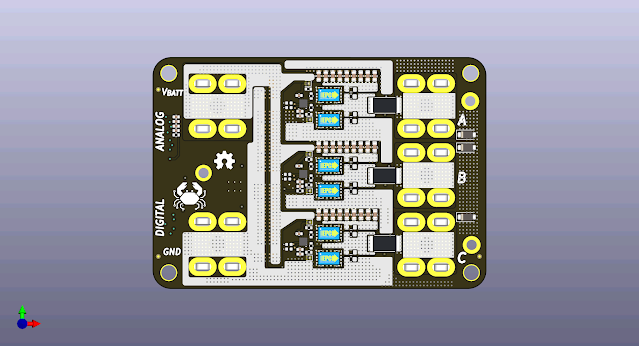
KiCad users studying real industrial PCB layouts
Universities teaching industrial automation
Makers creating custom automation systems
Open-source hardware contributors
Researchers developing specialized control systems
If your goal is to understand how industrial controllers are engineered—not just how to program them—LibrePLC32 provides an accessible and well-documented starting point.
Final Thoughts
LibrePLC32 demonstrates how open-source hardware can make industrial automation more accessible. By releasing complete KiCad design files, CAD resources, and detailed documentation, the project invites engineers to explore the inner workings of a modern PLC instead of treating it as a sealed black box.
Its combination of a wide 8–36 V DC input range, isolated digital inputs, transistor and relay outputs, plus RS-485, CAN, and Ethernet connectivity makes it a capable platform for prototyping, education, and custom automation projects. While it may not replace certified commercial PLCs in mission-critical deployments, it excels as a transparent, modifiable foundation for learning and innovation.
For anyone interested in open hardware, industrial electronics, or embedded control systems, LibrePLC32 is a project well worth exploring. It showcases how community-driven engineering can lower barriers to industrial automation development while giving users the freedom to study, adapt, and improve the hardware to meet their own needs.