FalCAN Probe: An Open-Source STM32 USB Adapter for CAN, RS-485, and RS-422 Networks
Industrial communication often requires multiple interface adapters. Engineers working with CAN bus may also need RS-485 or RS-422 connectivity for testing, debugging, or integrating legacy equipment. Instead of carrying several USB adapters, the FalCAN Probe combines all three interfaces into a single compact, open-source device built around an STM32 microcontroller.

Created by Anders B. Nielsen, the FalCAN Probe is much more than a simple USB-to-CAN converter. It doubles as a small STM32 development platform, giving embedded developers direct access to debugging interfaces, GPIO pins, and customizable firmware.
The project is fully open source, making it an attractive option for hobbyists, researchers, industrial developers, and anyone looking for a flexible communication interface.
Project Repository: https://github.com/AndersBNielsen/FalCAN
What is FalCAN Probe?

FalCAN Probe is a USB Type-C multi-protocol communication adapter based on the STM32F042 microcontroller. Unlike many commercial USB adapters that support only one protocol, FalCAN Probe provides:
CAN Bus
RS-485
Full-duplex RS-422
Because it uses the STM32's native USB peripheral instead of a dedicated USB bridge chip, the hardware is significantly more flexible. Developers can completely replace or modify the firmware for their own applications.
Hardware Specifications
At the heart of the board is an STM32F042C6Tx, featuring:
ARM Cortex-M0 CPU running at 48 MHz
32 KB Flash
6 KB SRAM
Communication interfaces include:
USB 2.0 Full-Speed via USB Type-C
CAN bus using the Texas Instruments SN65HVD230 transceiver
RS-485 using SP3485EN transceivers
Full-duplex RS-422 support
Native USART1 interface
SWD programming header
Dual GPIO expansion headers
Status LEDs
5V USB-powered with onboard 3.3V regulator
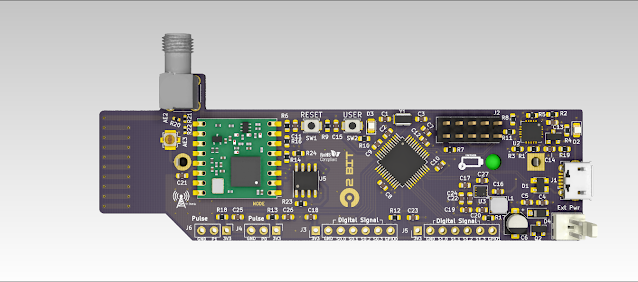
The board is designed as a compact 4-layer PCB and even includes an optional DE-9 footprint for standard CAN connectors.
One Device, Three Communication Protocols
One of the most appealing aspects of FalCAN Probe is its versatility.
CAN Bus
When configured for CAN mode, the adapter enumerates as a GS_USB CAN device, allowing immediate compatibility with Linux systems.
Developers can use standard Linux utilities such as:
can-utils
candump
cansend
Wireshark CAN support
No proprietary drivers are required.
RS-485
RS-485 remains one of the most common industrial communication standards used in:
PLCs
Building automation
Energy meters
Factory equipment
Modbus RTU devices
FalCAN Probe provides USB-to-RS485 functionality without requiring a separate adapter.
Full-Duplex RS-422
Many industrial systems still rely on RS-422 because of its excellent noise immunity and long cable support.
FalCAN Probe also supports full-duplex RS-422, making it useful for legacy automation equipment and specialized instrumentation.
Linux-Friendly Firmware
A major advantage of the project is its firmware.
Instead of reinventing the wheel, Anders based the firmware on a fork of the popular candleLight_fw project.
The firmware supports the Linux gs_usb kernel module, meaning modern Linux distributions—including Ubuntu and Raspberry Pi OS—recognize the adapter without additional driver installation.
This dramatically simplifies deployment for developers working with embedded Linux systems.
Simple Hardware Mode Switching
FalCAN Probe switches operating modes using hardware jumpers.
For example:
JP4 Open
Device appears as a GS_USB CAN adapter.
JP4 Closed
Device enumerates as a USB CDC serial device connected to USART1 for RS-485 or RS-422 communication.
This straightforward approach avoids complicated software configuration while allowing the board to serve multiple purposes.
More Than Just a USB Adapter
Because the STM32 is fully exposed, FalCAN Probe can also function as a miniature development board.
Developers have access to:
SWD debugging
Boot configuration pins
GPIO headers
Native USB
USART
Firmware programming
That means the hardware can easily be repurposed for custom embedded applications.
Possible projects include:
CAN traffic analyzer
CAN message generator
Industrial protocol converter
Custom USB device
Embedded development platform
Diagnostic interface
Production test fixture
Rather than buying separate hardware, developers can simply flash new firmware.
Fully Open Hardware
Perhaps the strongest feature of the project is its commitment to open hardware.
The repository includes:
Complete KiCad 9 project files
Schematics
PCB layout
Gerber files
Bill of Materials (BOM)
LCSC part numbers
This allows anyone to:
Study the design
Manufacture their own boards
Modify the hardware
Contribute improvements
Adapt the design for commercial or educational projects under its open license.
Why Open Hardware Matters
Many USB communication adapters are proprietary.
If a bug exists, users must wait for vendor updates—or never receive one.
FalCAN Probe takes the opposite approach.
Because both hardware and firmware are open source, developers can:
Audit the design
Fix bugs themselves
Add new protocol support
Customize firmware behavior
Integrate the project into larger systems
This level of transparency is especially valuable for industrial automation and long-term embedded projects.
Potential Applications
FalCAN Probe is suitable for a wide variety of applications, including:
Automotive CAN diagnostics
Industrial automation
Factory equipment maintenance
Robotics
Embedded Linux development
Raspberry Pi projects
Modbus communication
Field service tools
Protocol debugging
Laboratory instrumentation
Its flexibility also makes it useful for students learning industrial communication protocols.
Advantages Over Traditional USB Adapters
Compared with typical USB communication adapters, FalCAN Probe offers several noteworthy advantages:
Supports multiple industrial protocols on one board
Native STM32 USB implementation
Linux driver compatibility
Fully open-source hardware
Open-source firmware
KiCad design files included
GPIO expansion headers
SWD programming support
USB Type-C connectivity
Can be reprogrammed as a general-purpose STM32 development board
These features make it considerably more versatile than many single-purpose USB-to-CAN adapters.
Final Thoughts
The FalCAN Probe is an excellent example of how open-source hardware can provide professional-grade functionality without vendor lock-in. By combining CAN, RS-485, and RS-422 support into a single STM32-based platform, it offers embedded developers, automation engineers, and hardware enthusiasts a flexible tool for communication, debugging, and development.
Even more impressive is the project's openness. Complete KiCad files, firmware, schematics, PCB layouts, and BOM files are freely available, allowing anyone to study, modify, or manufacture the hardware. Combined with native Linux compatibility through the gs_usb kernel module, the FalCAN Probe stands out as a practical and highly customizable solution for industrial communication tasks.
Whether you're building diagnostic tools, developing embedded firmware, or simply exploring industrial protocols, FalCAN Probe provides a capable foundation that encourages learning, experimentation, and community-driven innovation.